
In Ìhè wụ Íhé, I contemplate the photograph not as a fixed image or an object to be consumed, but as a trace—a residue of the presencing of light. The phrase Ìhè wụ Íhé, which I coined in Igbo, speaks to a profound ontological insight: light is thing. Not merely that things are seen through light, but that all visible and emergent forms are expressions of light itself. Light, not merely as that which pertains to visibility, but as illumination—and thus differentiation. And differentiation, in turn, as the ground for discernment: an attuned awareness of movement-as-relation, where the presence of one thing implies, invites, or reveals the presence of another. As the Igbo say, ebe ihe kwụ, ihe ọzọ kwụ n’akụkụ ya—where one thing stands, another stands beside it.
In this light, the photograph is not a thing that stands alone, but a process and product of discernment: the situated awareness of light’s movement in relation, and the presence of the artist within that unfolding. — where one thing stands, another stands beside it. Every thing is born of light, is light slowed down, made legible through relation, movement, and time.
The phrase also plays on the uncanny similarity in sound between the English words “light” and “thing” when spoken in Igbo-inflected pronunciation, revealing an unexpected resonance between illumination and materiality. This phonetic convergence inspired a deeper philosophical synthesis: the idea that light and thing are not opposites but gradations of the same process of movement and emergence.
This body of work asks: what is the rhythm of this movement? What is the measure of light’s emergence? And how might photography, not as capture but as witness, trace, or gesture, render this rhythm visible?
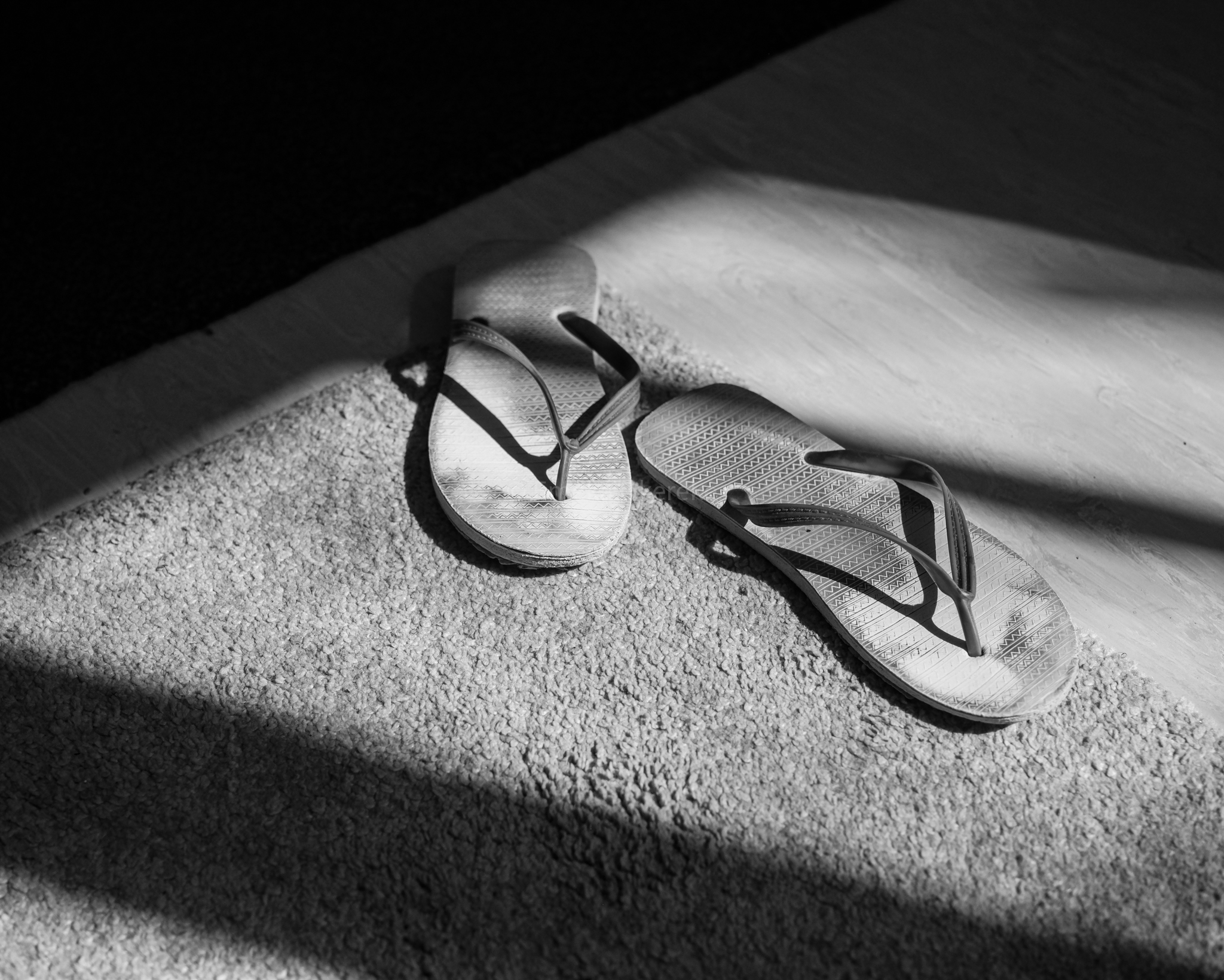
In this way, each photograph becomes Àkàrà Àkà—a concept in Igbo that speaks to the trace or mark of one’s way of being in the world. It names the presencing of self through action, not in grand gestures, but in the small and often subtle ways being is revealed in relation. In the context of this work, Àkàrà Àkà is not only the residue of light’s motion; it is also the mark of my own movement, sensing, and presence as the photographer. The one whose seeing, witnessing is also acting.
This is where the photograph, the photographer, and the world enter into a relational loop. I do not stand outside of what I observe. My body is attuned to the rhythm of light. My gestures—framing, timing, breathing—are inscriptions within the field of emergence. The photograph is not made; it emerges, co-created through the movement of light, the material conditions of the world, and my own responsiveness. The image thus becomes an enumeration of relationality—a co-presencing between light, world, and self.
This project transcends the conventional logic of photography as a medium of fixing, ordering, or legitimizing the gaze. Instead, it explores the photograph as a gesture, a presencing, a mark in an ongoing flow, a relational field. Each image is an echo of a rhythm already in motion, a fragment of a much larger choreography of being.
In Ìhè wụ Íhé, I trace the threshold between the visible and the felt, between light and thing, between the seen and the seer. The work lives in that space where light becomes thing, where thing is rhythm, and where rhythm leaves a mark.
A trace.
An Àkàrà Àkà.
© Emeka Okereke 2025. All rights reserved. All text and images presented here are the intellectual property of Emeka Okereke. No part of this text or accompanying images may be reproduced, distributed, or transmitted in any form or by any means without the prior written permission of the author.

Ongoing Body of Work:

This is an ongoing body of work, currently in development. The ideas and images presented here are part of an evolving exploration and may be revised or expanded upon in future iterations.
 DIARY OF A BORDER-BEING