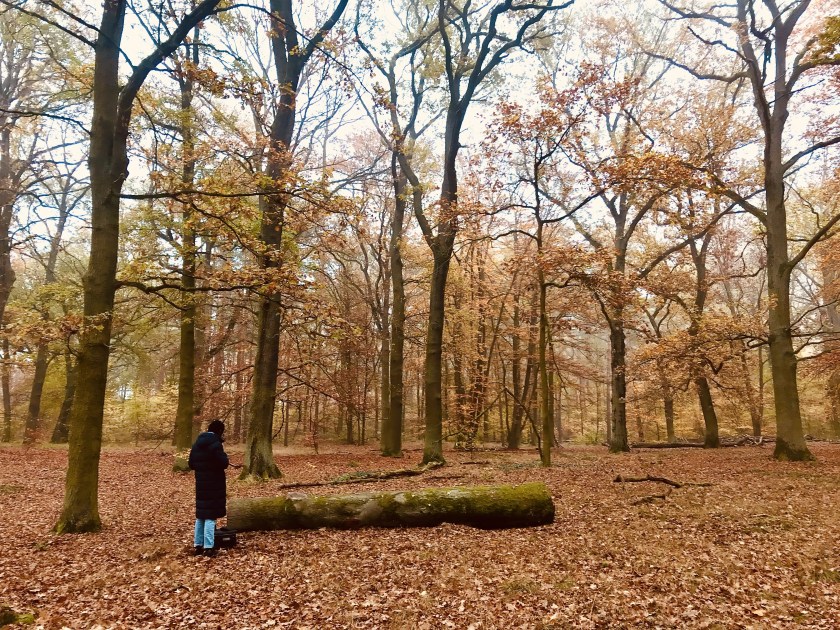
This essay introduces and sets the stage for exploring all-centeredness, a term coined by Emek Okereke, to describe the dynamic interplay between individuality and unity. It invites readers to reflect on presence, essence, and the fertile ground of being, where difference and interconnectedness coexist in harmony.
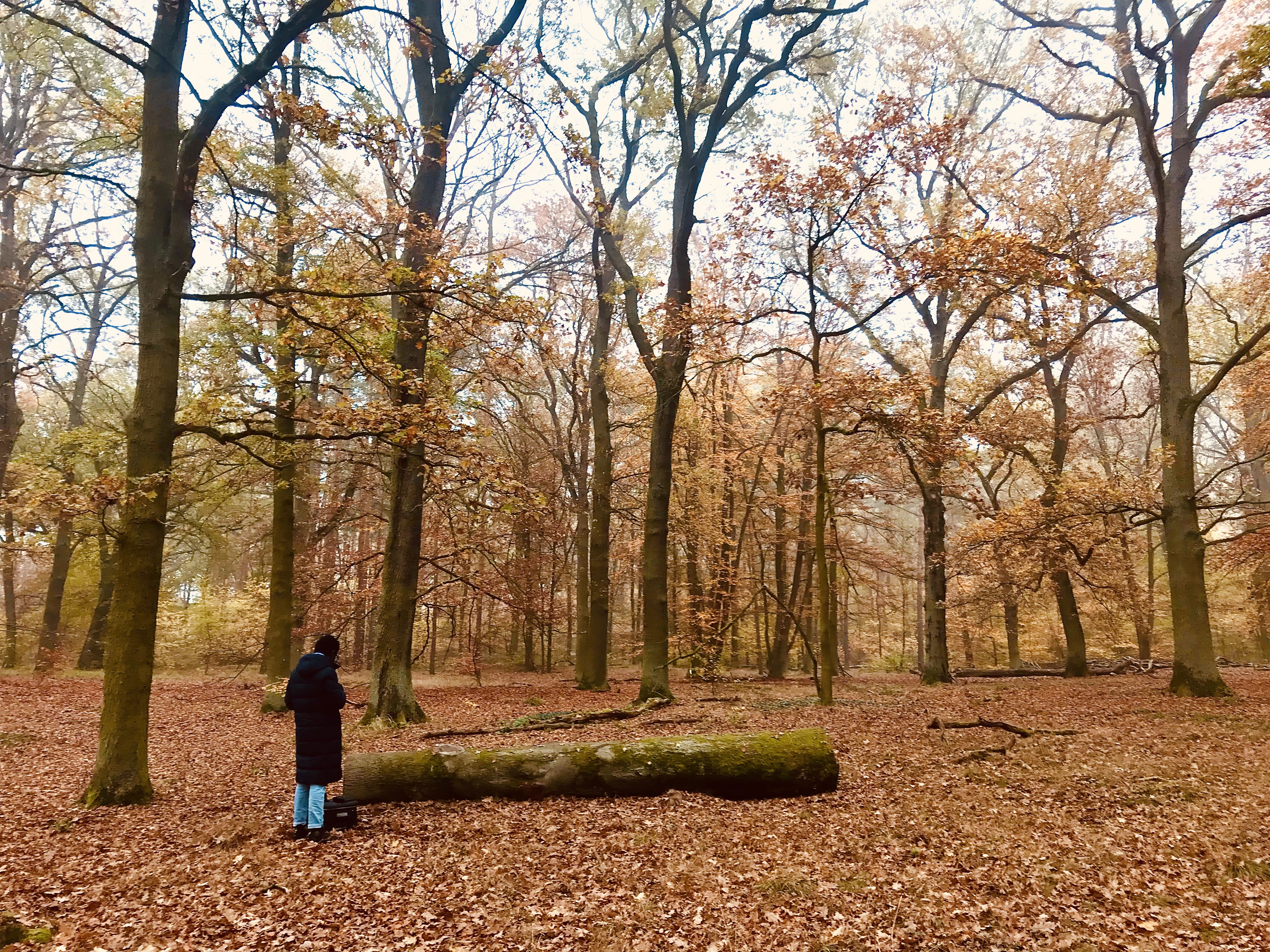
We are often raised to believe that even our spirituality has a collective, uniform architecture. The religious scriptures tell us there is one God, one heaven, and one path to it. If one does not adhere to the edicts of the religion they are born into or raised in, it is deemed sinful. One is bound for hell or an existence of eternal damnation. It is a doctrine of conformity.
Yet I have often asked: why, then, are we so different? Why do I, for instance, feel that my path is unique to my nature? Why do I recognize the collective yet feel so subjectively unrecognizable?
What is this difference? Is it antithetical to unity, to wholeness? Or is it an intrinsic quality of it?
This is a question, I believe, that plagues many. We might not always bring it to the forefront of our consciousness, yet it is a thorn in the flesh.
I decided to tackle the question headlong. This quest led me inward, through that pathless road of truth. This road cannot, will not, be the same for everyone. It is futile to attempt to describe its nature in words. That is not the purpose. It is a truth that need not be voiced for it to be the foundation of one’s inquiries. The very attempt to put it into words presupposes the possibility of it being a lie. Words are not powerful—only words that suffer the turmoil of truth have the power to sculpt meaning. Think of this as a formula for side-stepping the cacophony of a noisy world.
Truth is a path that holds the key to an appraisal of our nature. It seems to me, so far, that each and every one of us has an unthreaded path before them. It is not a path that conforms. Yet, there is a point of convergence where one becomes all.
The correlation between one and all, in this context, is not merely dichotomous. There are many steps—congruencies, dissonances, upheavals, confusions, illusions, clarity—that shape the living reality of this path from one to all.
There will be detours, junctions, but also guiding signposts. They will come in the form of synchronicities, intuition, and knowledge gleaned from applying one’s inklings.
Listen: nothing is easy on the pathless road of truth. Effortlessness is that pool of water buried under layers of earth.
Yet, it never truly feels lonely—except if one loses sight of the first guiding premise: that this road is deeply personal. To walk this path is to seek to find for oneself, by oneself.
The observer is the observed, and a mirroring of all that is observable.
Yes, it is a road of solitude, but it is not a road of isolation. You are not alone. There is a presence with you—a deeply familiar you, even if ever elusive. It is as though it is always one or many steps ahead. It is ahead because it is a guidance system. It is the self that engages with every question, providing footing upon footing on the pathless road.
The Igbo say, “Onye ajuju anaghi efu uzo”—one who questions will never miss their way. This is the nature and working of the pathless road. It is a promise: the seeker is guided by their questions. This questioning is not a quest for a definite answer. An answer is, at best, a fixed image—only good for the context, or perhaps the moment of asking. Remember, this is a journey. A journey to where? This question misses the point of the process: the journey is the destination. The journey will always be the destination. It is a journey to oneself. And oneself is always in the present. Thus, it is a journey to the present—a point of convergence between one and all. It is here. It is now. Yet it is a here and now carried along by the wind in a timeless manner.
There is no assurance other than this: the one who seeks finds. The one who questions will not miss their way. That is the nature of the pathless road of truth.
The Self is infinitely in Love.
Imagine the power of this transposed way of perceiving the Self: infinite in love. This idea of the infinite, of the perpetual. The infinite is also the infinitesimal. There is no space, no gap, no distance in between. Yes, we can acknowledge the human condition (for it is a condition—an act of conditioning). But what wondrous, humbling expansiveness, to think of oneself as infinite in love. Everything collapses into the proverbial mustard seed that, when it falls on tilled soil, grows into a mountain. Isn’t it futile, then, to want to arrest or measure such wondrous expansiveness? How would simply reveling in such wonder feel in everyday existence? Simply to be in it. Nothing to take, nothing to give. Nothing to measure. Just be.
One who questions will not lose their way.
What is this question? It is an orientation device toward a direction. What is this direction? It is a direction to the present moment. It leads to one’s presencing because when one is in the present, they are where they ought to be. There is nothing else but the present moment of all times. There is no place else but the location in one’s presence. Thus, it is not for nothing that so many teachings correlate the present moment with harmony.
In honoring difference, nothing is lost. Instead, everything is contextualized. The absence of hierarchy is a natural consequence of honoring difference. When one thing is deemed better than another, an elimination process begins, sowing the seeds of annihilation. Yet, when the specific nature of disparate things is honored through understanding and undimmed acknowledgment, they naturally “fall” into the right places—like dust settling quietly on a surface.
What is all-centeredness? It is to embody—viscerally, experientially—to the point of becoming a living reconciliation of the paradox that All is One. The Self is all-self. It is not an emotion. It is a state of being.
Everything, every being, every entity, has an essence. Without essence, there is no existence. This essence isn’t reducible to essentialism; it is the nature of a thing when it is not approximated or compared with something else.
The dehumanizing element of poverty is not the condition of being poor. It is that the one labeled as poor is always approximated—or self-approximating—against the quantity called wealth. Otherwise, how can both the poor and the rich fail to recognize the immeasurableness of love in every breath of air? How can this not be valued simply for what it is?
The recognition and acknowledgment of the essence of a being, an entity, or a thing is the fertile soil upon which the seed of encounter is planted. To nurture this seed is to express beingness and thus the creativity and poetry of relation.
On both grand and minute scales, existence is a kind of emptiness. An emptiness reminiscent of the ground—a goddess of fertility, a womb. In Igbo cosmology, the codes of living are called omenala—that which is done on or by the land (or ground). The ground is such a powerful metaphor and deity. It is spaciousness—not as an outsized projection of boundaries but as the ground that allows the existence of paradox: that the infinite is as the infinitesimal. This form of emptiness is sentient and generative, nurturing relations between disparate things, allowing essence to manifest as many-ness. Without the emptiness that is existence, essence is redundant.
Thus, when we say, “all things are possible,” we cannot take this literally. Nor is it a promise to be claimed by one individual or group as a right to all things. It implies that that which is, is. Life—what I like to call creative action—does not care about what is possible or impossible because all things are already possible.
Isn’t it a misplaced priority, then, to hinge one’s being and intention on a fixed definition of “possible”? What if we zoom out our perspective to include emptiness as the ground that nurtures all things? Then, a dialectic arises between the nameable and the unnameable. The space between them is the realm of human action—not merely a transitory space toward “becoming,” but one of the present, the now. The all that is. The all as it is.
 DIARY OF A BORDER-BEING